LED Video Walls
Installation Process
Installing an LED video wall is a structured end-to-end process, not a plug-and-play exercise. A typical project moves through four stages: a survey and design phase, structural and electrical preparation, panel installation and commissioning, and finally training and handover. Understanding what each stage involves helps you plan effectively and avoid delays.
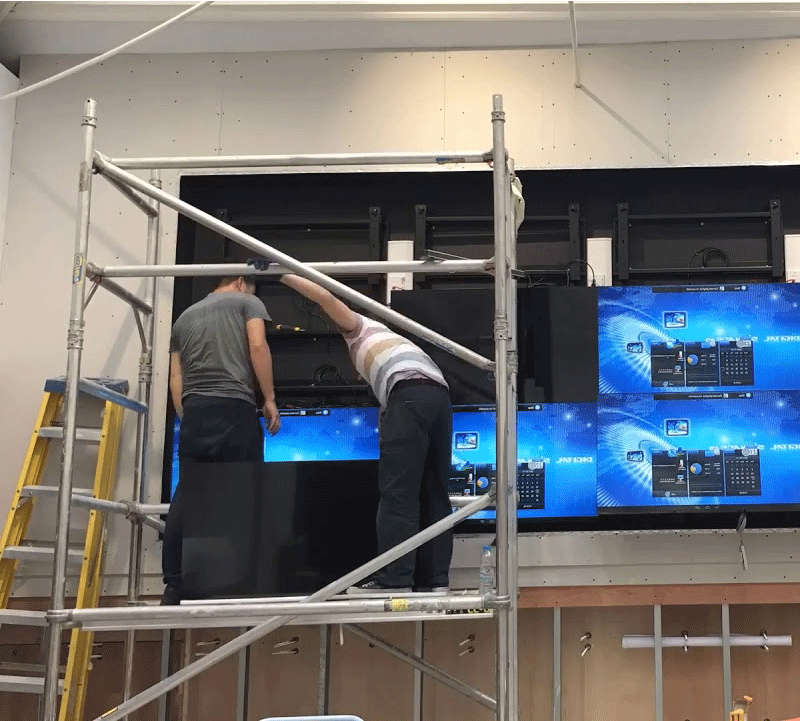
Once the mounting frame is in position and the electrical supply has been prepared (a Type C circuit breaker is required due to the high inrush current on startup), the LED panels are assembled row by row from the bottom up. On your side, you will need to ensure the wall surface is flat and load-bearing, that a suitable power circuit is available nearby, and that there is sufficient access for the installation team.
Following the physical setup, the LED driver must be informed about the screen’s configuration and the specification of each panel. The LED driver can then accept input signals from various sources such as computers, digital signage players, or TVs. The panels are factory calibrated, which eliminates the need for further on-site calibration. Depending on the LED wall, manual brightness adjustments may be possible, or a light-sensing device can be used to automatically modulate the screen’s brightness based on ambient light.

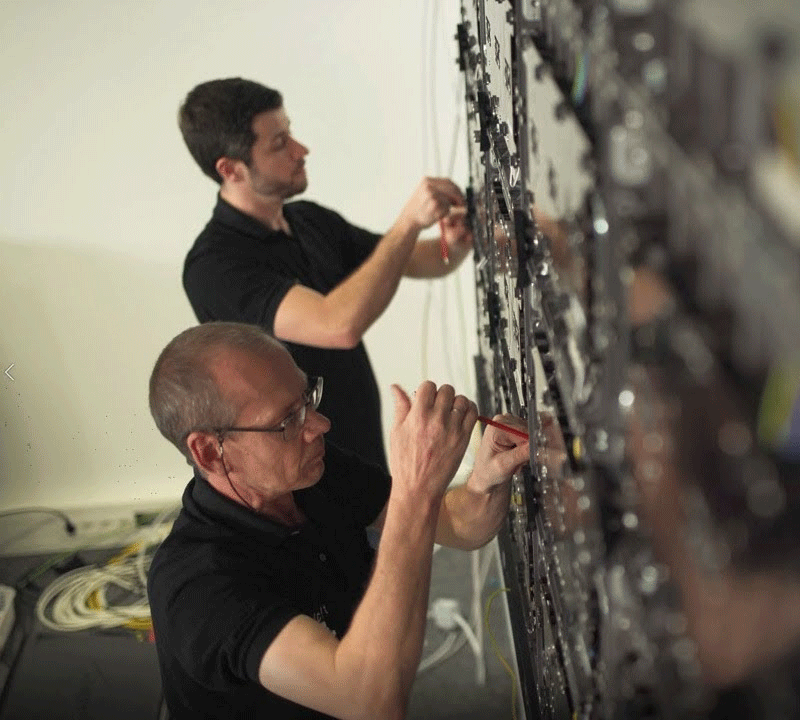
Finally, there is the critical aspect of after-installation support, which should be consistently available to ensure the optimal performance and longevity of the LED video wall.
Partnering with LedWall for Your
LED Video Wall Installation
Not sure where to start? A brief consultation call is often all it takes to scope a project and produce a budgetary estimate. The LedWall team handles everything from initial site survey through to commissioning and staff training, so you do not need in-house AV expertise to get a successful installation.